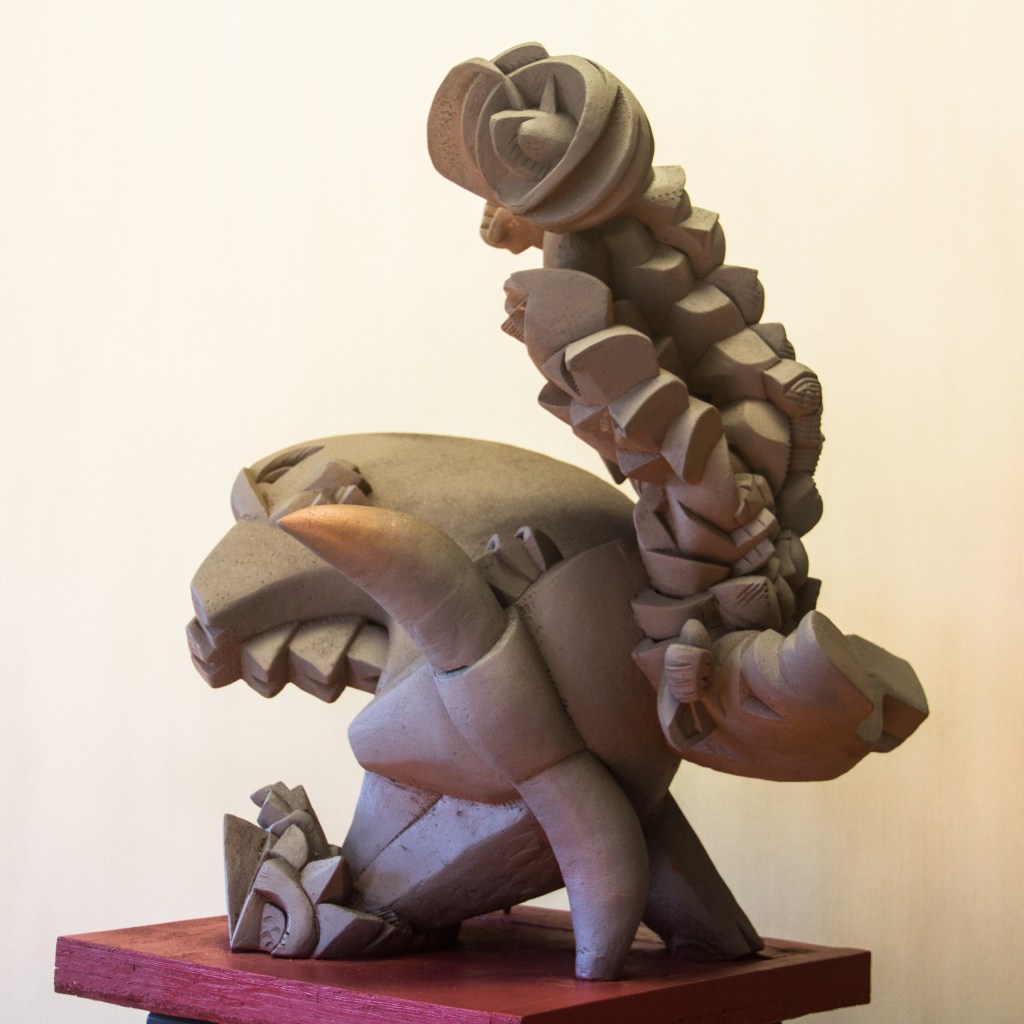
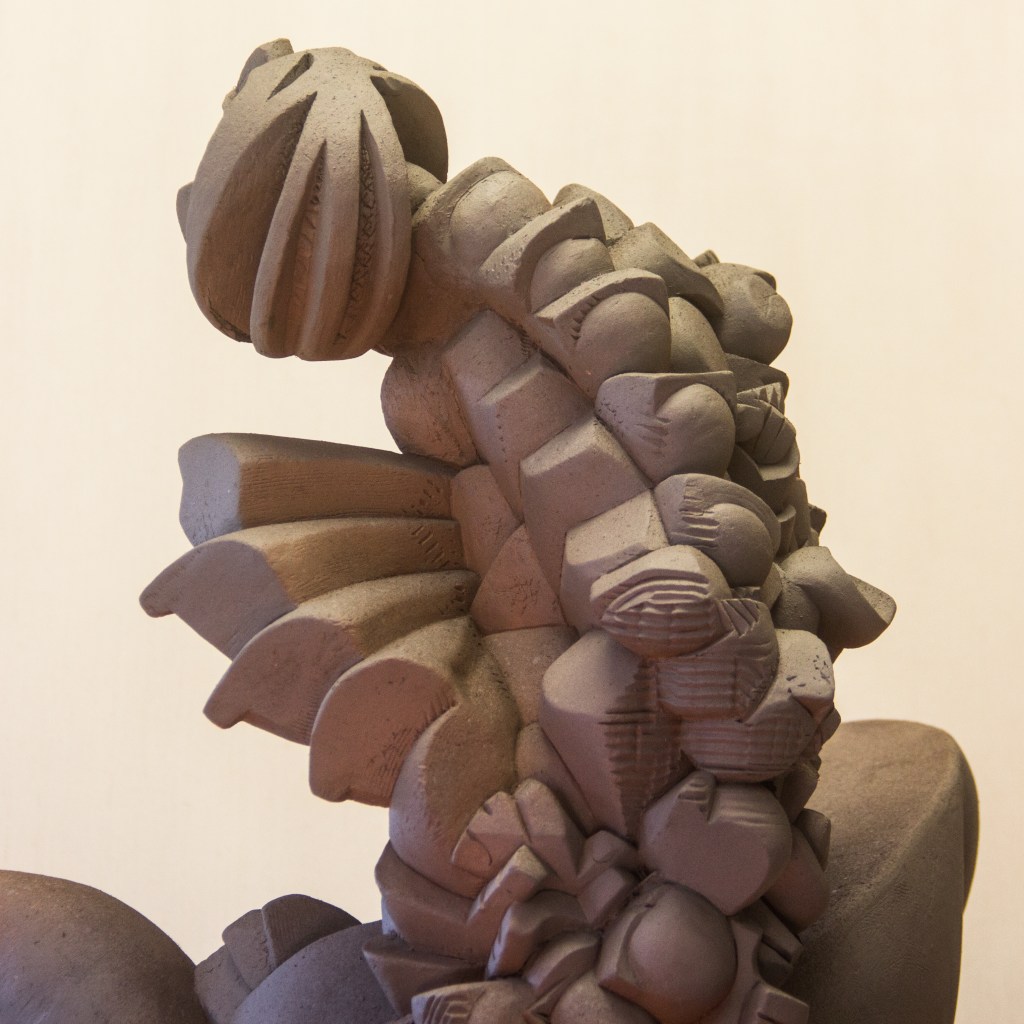
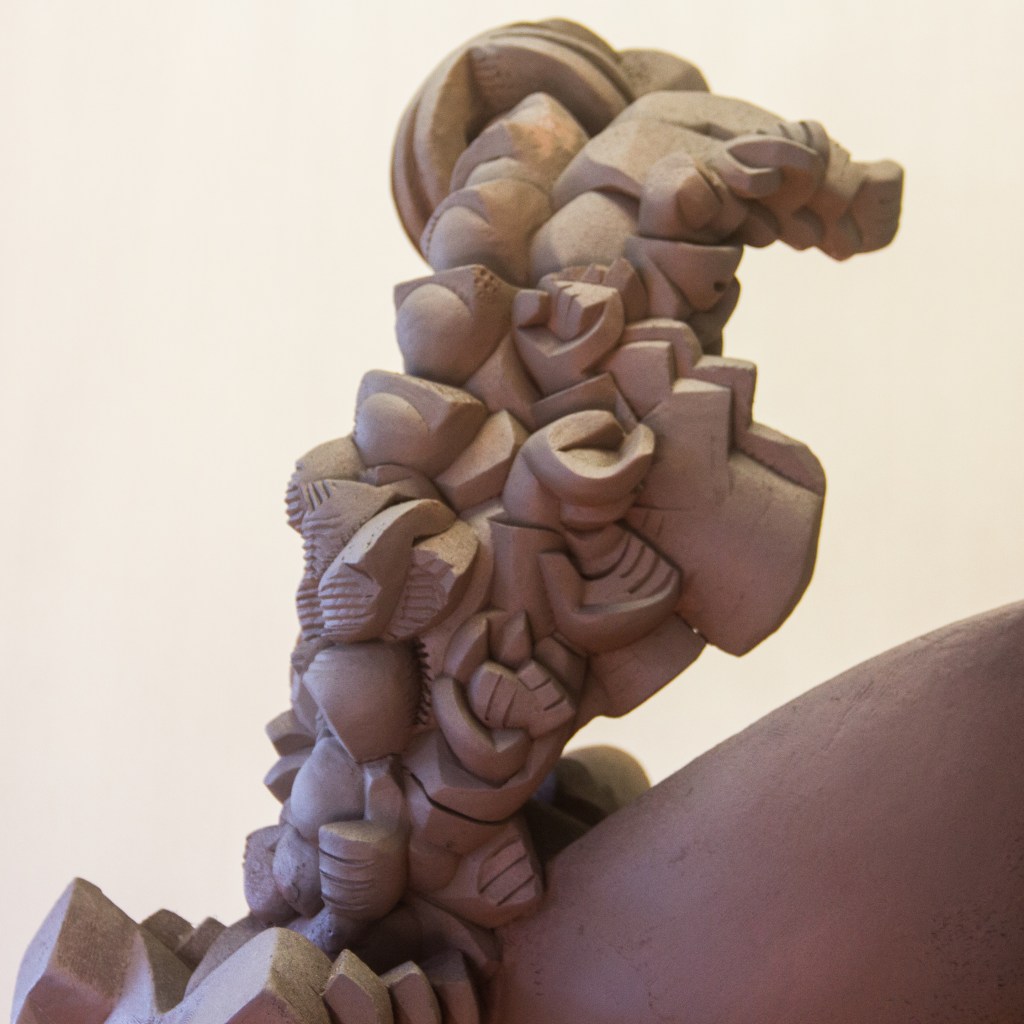
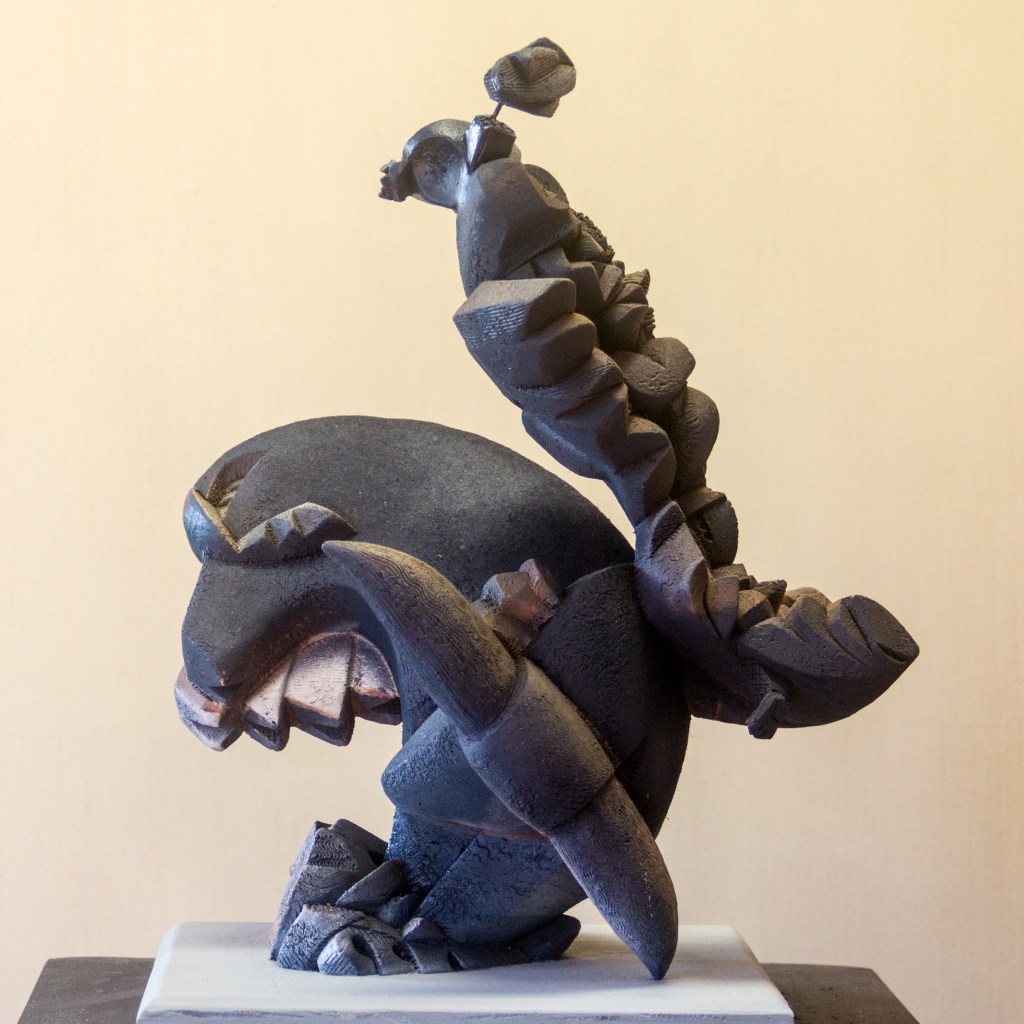
Dude Descending a Steer #1
or Rite of Passage
21 x 17 x 24″
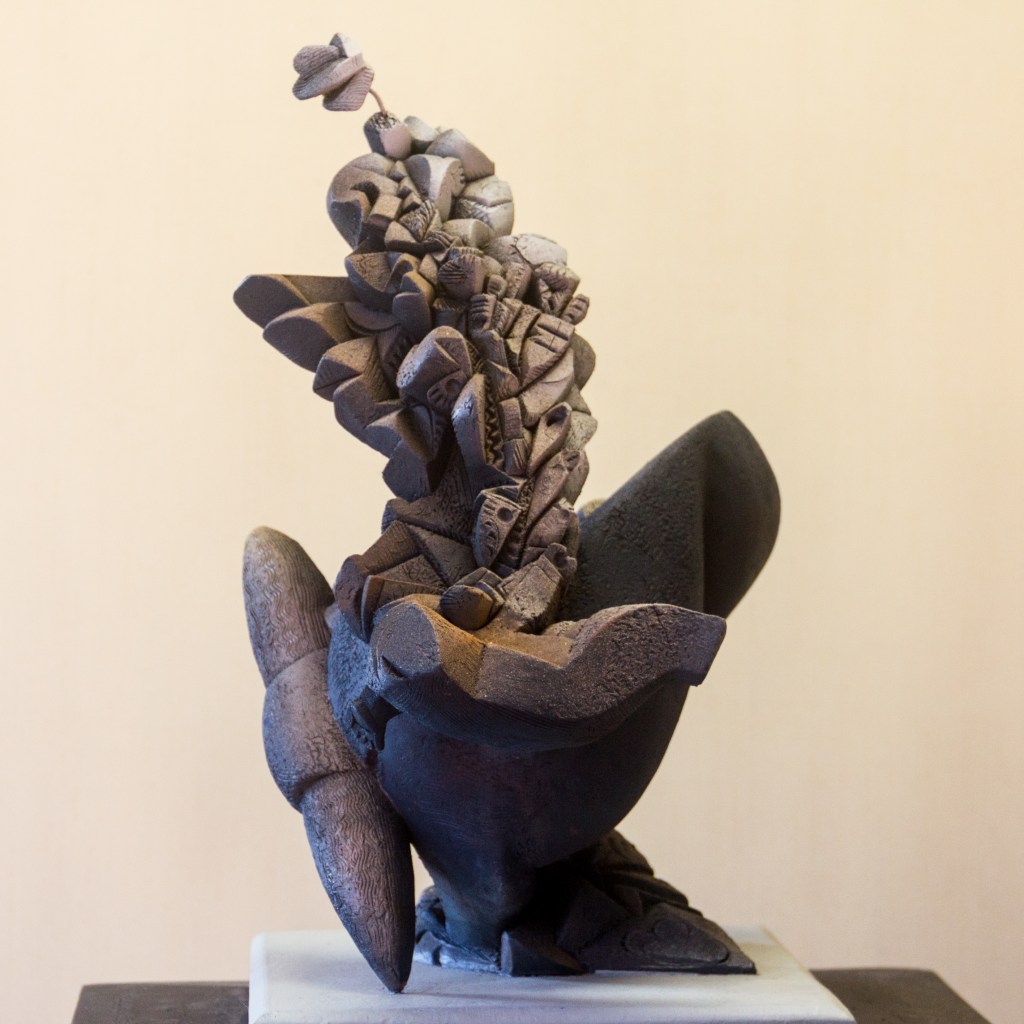
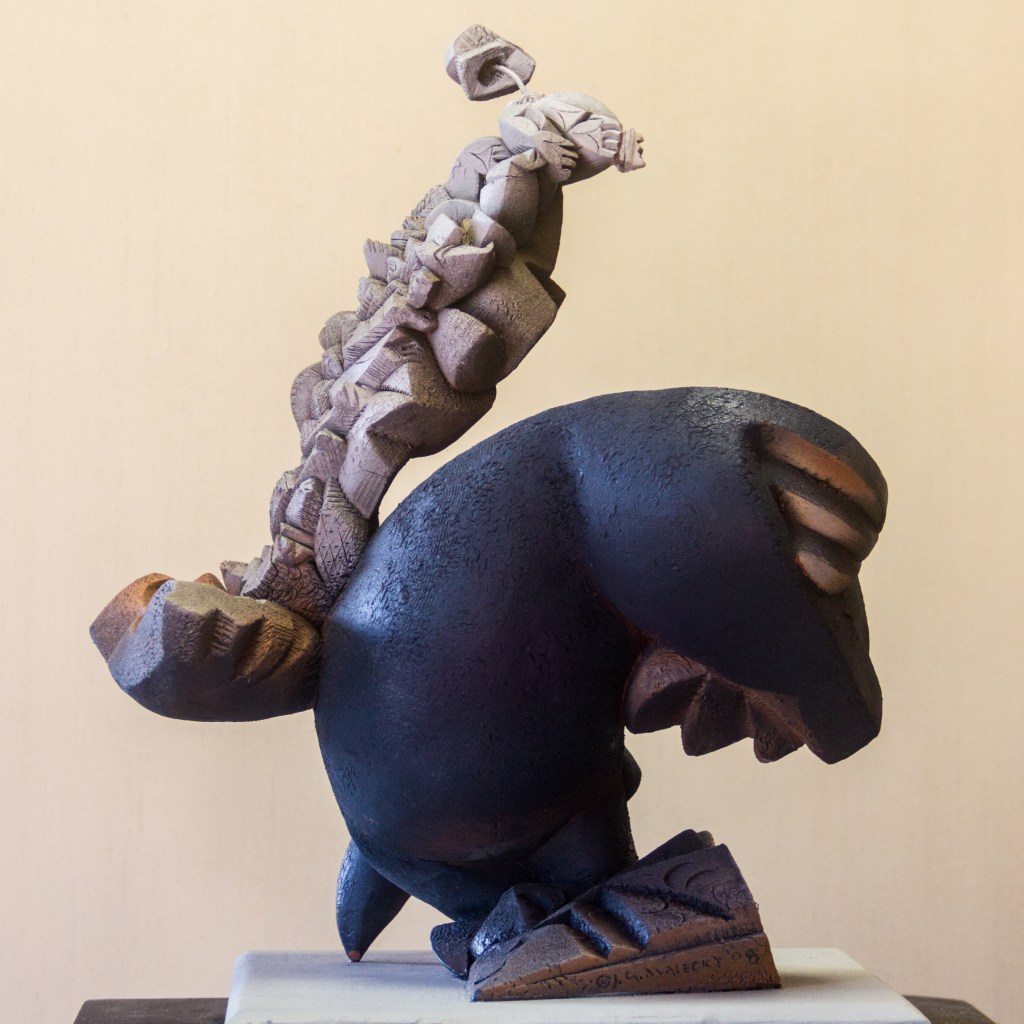
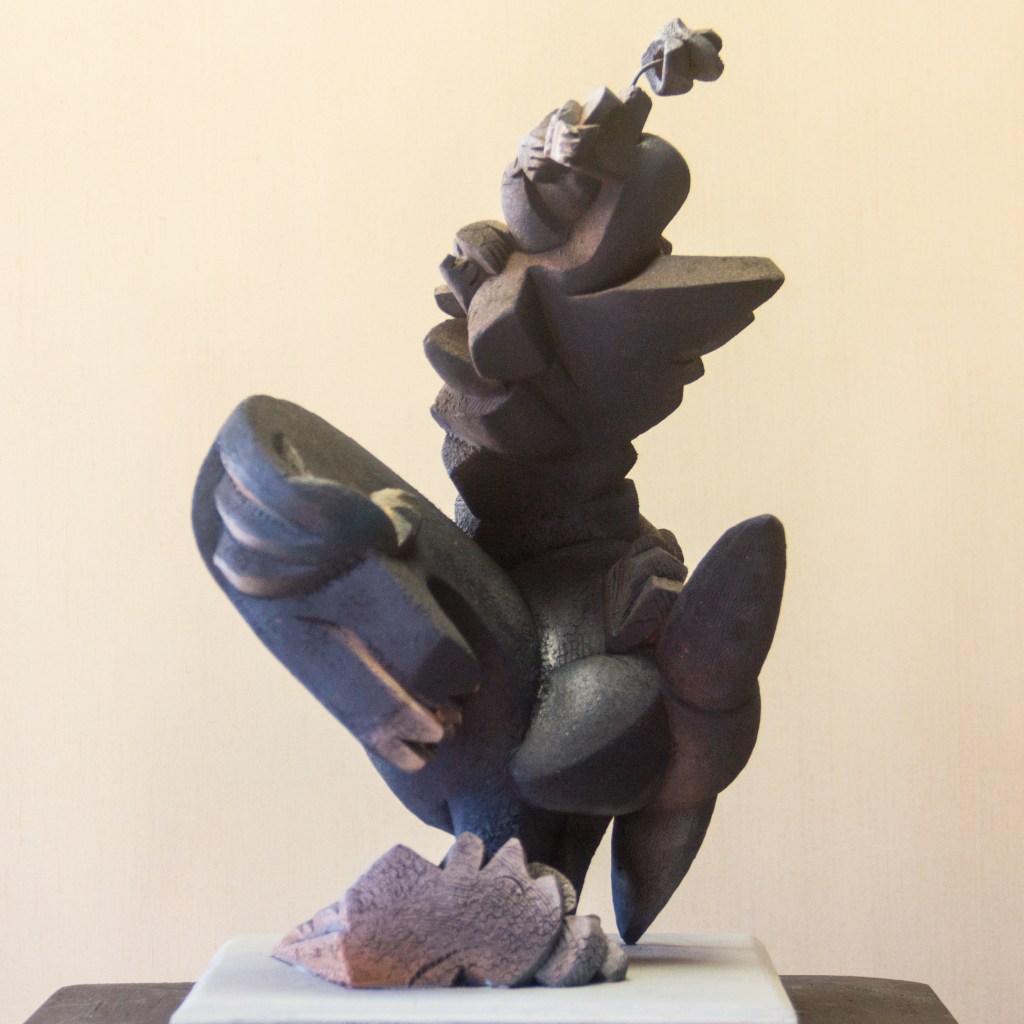
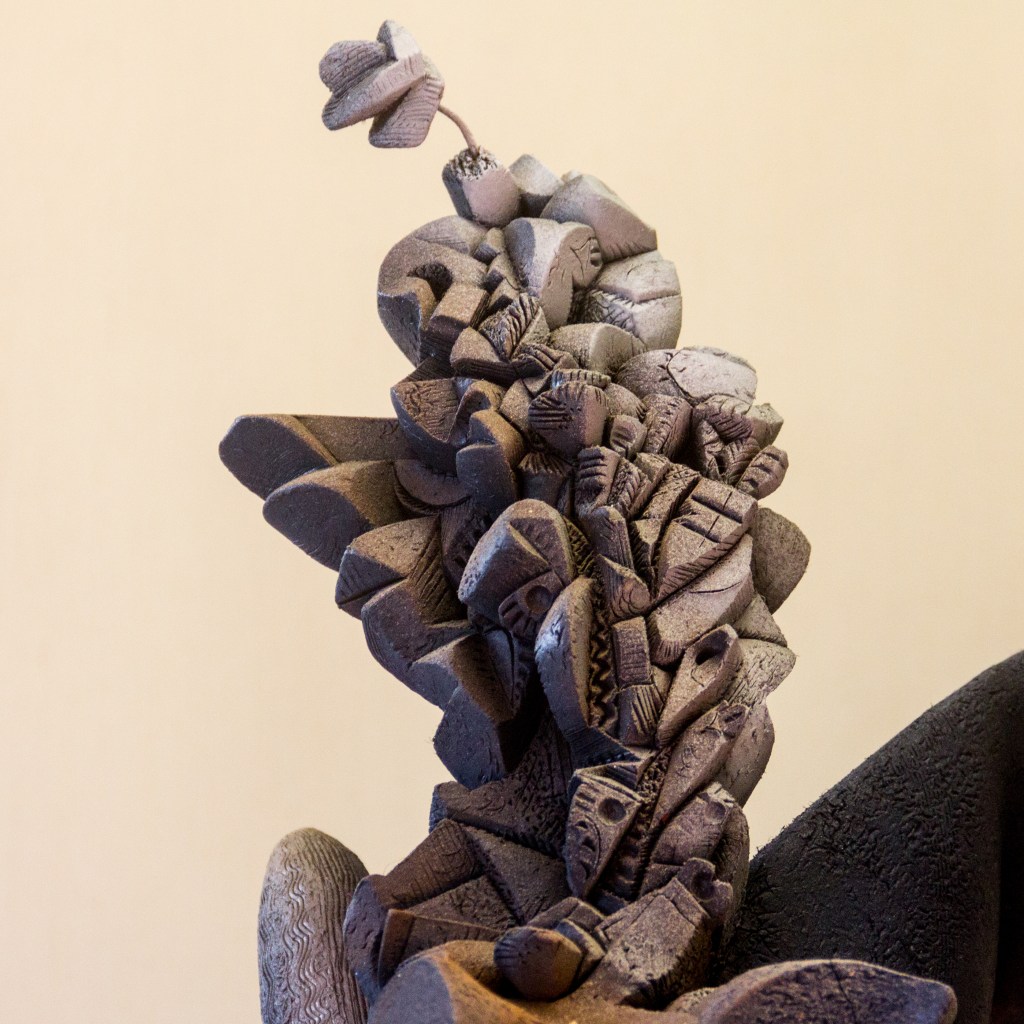
Dude Descending a Steer #2
or Descent into Whoa?
13 x 9 x 14″
Here some semblance of the human form is maintained in a sequence of expressive gestures that track the descent of a young cowboy to a place where his real or imagined metamorphosis into manhood suddenly happens, apparent about halfway down.
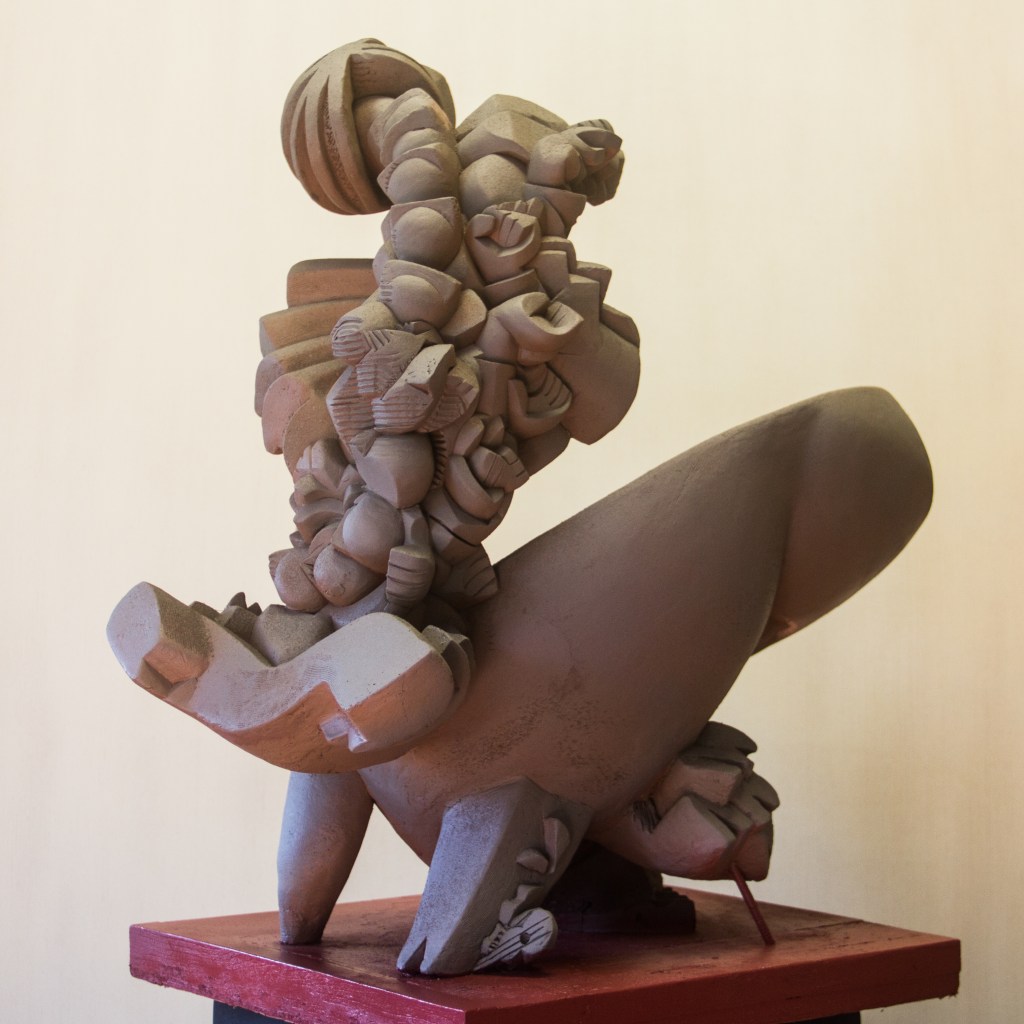
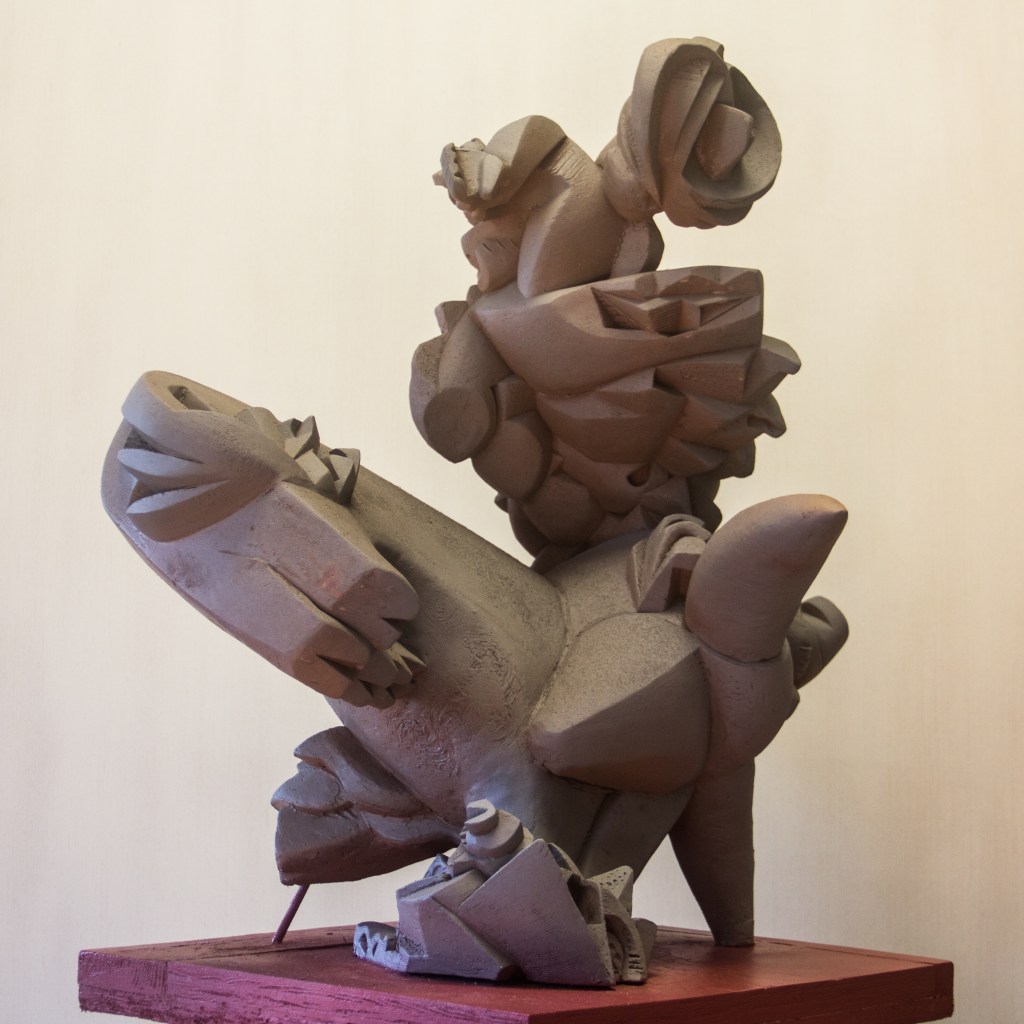
Videos of these pieces available upon request at jimmalecky@gmail.com
The historian Jacques Barzun called cubism a form of dissection, and dissection, for some a form of contempt. So here the cowboy descends totally into the dissecting machine of a cubist where the multiple convoluted forms turn on the subject matter for a takeover. They consume, dismantle, and dismiss it. He is not seen again until he drops out the bottom in one unhappy piece. Unlike the figure in “Rite of Passage,” he does not give double thumbs up.
Both pieces are pure slapstick, cubestick, if you like.
Picasso’s Cubism, an opinion
A friend once commented, “I don’t know much about it, but isn’t cubism usually ugly?” Of course that’s not inevitable. Cezanne who opened the door to it with his translucent flattened shapes affirmed, at his best, an order drawn from, yet separate from, the original optics. In all art, departure from the model is inevitable. A portrait whether in oil or in a poem will portray flesh and hair in oil or words, not in flesh and hair. This dissimilarity or departure between the model studied and the art created can in itself give rise to ideas that call the artist to experiment.
Like the artist, “The work of universal nature is to translate this reality to another, to change things, to take them from her and carry them there. All things are mutations…” Marcus Aurelius
But if art is to be a life-affirming as the abstract sculptor Barbara Hepworth said she wanted her work to be, a felt courtesy, maybe even reverence for the substance of things is a good starting point, an acquaintance rightly begun. Even the works of one who could distill complex forms into a single elegant line, if lacking that courtesy, will in the end communicate contempt for things, what they are, what they mean, or ought to. So, yes, to demean the existence of people of things, a genre must become one with the ugliness it abides. How could it not?
Copyright Jim Malecky. All rights reserved.
 Jim Malecky Art